Choosing a generator by kilowatts alone can lead to costly problems. Backup and prime power describe different operating duties, not simply different machine sizes. If you are asking “what is the difference between backup and prime power,” start with how often the generator will run and how its load changes. A standby or backup unit generally supplies power during an outage for limited periods. A prime-rated unit is designed for regular operation, often with varying loads and operating-hour conditions set by its manufacturer.
The distinction matters on a farm, construction site, or remote facility. A backup generator may suit a building that normally receives utility power but needs emergency coverage. A prime-rated generator may better fit a site without a dependable grid connection. Small details matter. A pump’s starting current, a heater’s steady demand, and changing daily loads can all affect the required rating. This guide explains five practical differences, including operating hours, load limits, maintenance expectations, cost, and typical applications. It also highlights details worth checking in the generator’s nameplate and technical datasheet, since rating terminology and conditions can vary by model. Real installations are rarely perfect examples. A site may use a prime-rated machine for occasional outages, or combine generator power with other sources. That does not make the ratings interchangeable. Compare your actual load profile with the manufacturer’s stated limits, and ask a qualified power professional to review uncertain requirements before choosing equipment.
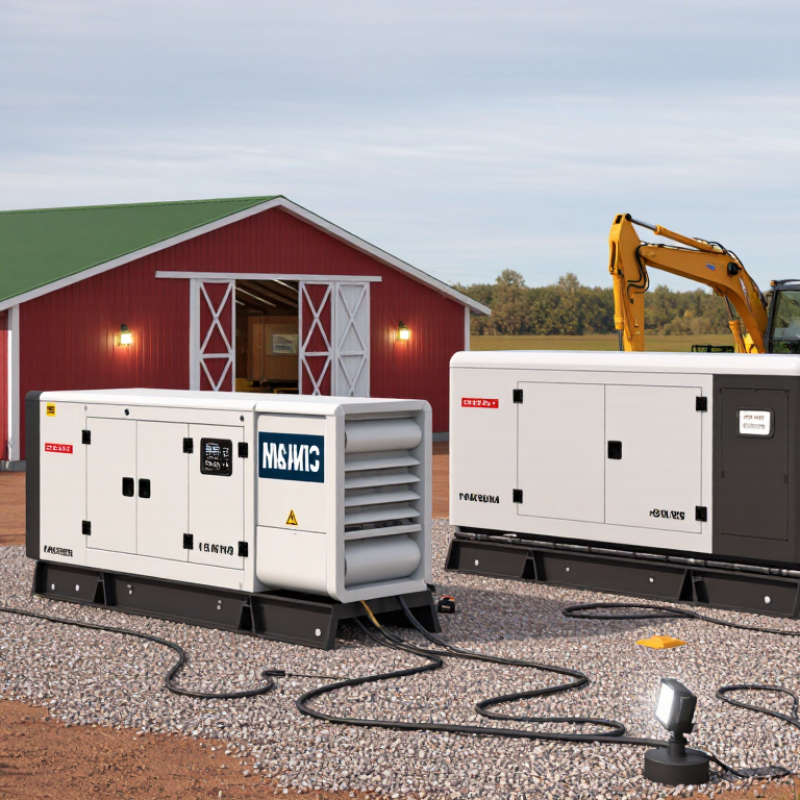
Backup power and prime power describe different duty cycles, not simply different generator sizes. Under ISO 8528-1:2018, emergency standby power is intended for limited operation during utility outages. Prime power is designed for variable loads over extended operating periods. The standard permits unlimited annual operating hours for prime power, subject to its rating conditions. Important distinction.
A prime-rated set may run a remote worksite day after day, supplying changing loads from pumps, lights, and tools. ISO guidance generally limits its average load over 24 hours to 70% of the declared prime rating, unless the manufacturer specifies otherwise. Standby units, by contrast, are selected for occasional outages and should not be assumed suitable for continuous service. A 100 kW standby rating does not automatically mean 100 kW prime capacity. Check the rating plate and operating manual.
Tips: Match the rating to the real load profile. Record peak demand, daily running hours, and likely motor-starting surges. Ask for the applicable ISO rating and derating figures for site temperature and altitude. These details are easy to overlook—and I would not size a system from headline kilowatts alone.
Backup and prime power describe different duty cycles, not simply different machine sizes. A backup-rated generator is intended for occasional use when the normal supply fails. Its permitted annual operating hours and load profile are usually restricted by the rating standard and manufacturer. A short outage may fit comfortably; running it every day for long shifts may not. Check the nameplate and manual, rather than assuming “backup” means unlimited emergency runtime.
Prime power is designed for regular operation where the generator supplies a variable load, such as a remote worksite. It can generally run for extended periods, provided maintenance intervals and any average-load limits are observed. The load matters. A unit serving tools, lighting, and pumps may see sharp changes as equipment switches on. Those changes affect fuel use, temperature, and service needs. Small details count.
A practical log helps. Record start and stop times, running hours, and approximate load; then compare them with the maker’s schedule. Standby ratings may allow limited annual hours, but exact limits vary. Don’t guess. Rating terms can be confusing, and even a careful estimate may miss a brief overload. If the generator will run routinely, confirm the intended duty cycle with a qualified technician before sizing or installation.
Backup and prime ratings describe different duty cycles, not simply “small” and “large” generators. ISO 8528-1:2018 defines Emergency Standby Power for supplying variable loads during utility outages. Its annual use is limited to 200 hours. Prime Power supports variable loads for unlimited annual hours under specified conditions. ISO allows a 24-hour average load of up to 70% of the prime rating, unless the manufacturer agrees otherwise. That limit matters.
Consider a 100 kW prime-rated unit. Its rating does not mean it should deliver 100 kW continuously at every site. A workshop’s compressor starting, lights, and heating loads can create brief peaks that differ from its average demand. Prime ratings may allow a defined overload; standby ratings generally do not. Check the exact rating plate and technical sheet. Small wording differences count.
Performance also depends on load steps, frequency and voltage recovery, temperature, and altitude. ISO 8528-5:2022 classifies generator-set performance, including response to changing loads. A unit may meet its headline kilowatt rating yet respond poorly when a motor starts. Measure both running demand and startup peaks, then ask for test data under comparable conditions. I would not size from peak demand alone; that can leave a system oversized and inefficient. Real loads are messy.
Typical rating convention: standby power generally allows no overload, while prime power may allow a 10% overload for up to 1 hour in a 12-hour period, subject to the applicable standard and equipment manufacturer’s limits. This is not a substitute for the specific generator’s rating plate or technical data sheet.
Backup power systems are used where interruption is costly or dangerous: hospitals, data centers, emergency-response facilities, and commercial buildings. They remain idle or lightly loaded until the normal supply fails, then support essential circuits while utility service returns. The Uptime Institute’s 2024 Global Data Center Survey found that 54% of respondents reporting an outage said it cost more than $100,000. That helps explain why data centers invest in layered backup, including generators, batteries, and transfer equipment. The International Energy Agency’s Electricity 2024 report estimated data centers used about 460 terawatt-hours globally in 2022, with demand potentially exceeding 1,000 terawatt-hours by 2026. Reliability matters.
Prime power serves as the main electricity source where grid access is absent, weak, or uneconomic. Typical locations include remote construction projects, mines, farms, and island communities. Unlike standby equipment, prime-rated systems are designed for regular operation and changing loads, so sizing must account for start-up surges, daily demand, fuel logistics, and maintenance access. A generator beside a remote pump station may run for hours each day; a backup unit at a city clinic may rarely run outside testing and outages. That is the distinction. In practice, the boundary can blur: hybrid sites may combine grid power, batteries, and generators, and the best design depends on actual load records—not just the label on the equipment.
Choosing between backup and prime power starts with one question: how often will the generator run? Backup, or standby, power serves during utility failures. It is designed for emergency use, with operating-hour and load limits set by its rating. Prime power suits sites without dependable utility supply or with extended, variable operation. It can support changing loads, but its rated capacity and maintenance schedule still matter. Check the applicable rating and operating manual; limits are not identical across equipment.
Match the rating to actual demand, not just the site’s average. A workshop may draw little overnight, then surge when compressors and pumps start. Record peak loads, expected run hours, starting currents, and seasonal conditions before sizing. The consequences of a poor choice can be costly. Uptime Institute’s 2024 Annual Outage Analysis reported that 54% of surveyed organizations said their most recent significant outage cost over $100,000. That survey covers data centers, not every facility, but it illustrates why critical loads deserve careful planning.
Tips: Compare the expected outage duration with planned operating hours. Include motor-starting loads and future expansion. Ask a qualified power-system professional to verify sizing and ventilation. A spreadsheet helps, but it can miss real-world load swings. Don’t guess.
Backup power serves during occasional utility outages. Prime power supplies regular electricity over extended periods. Different duty cycles—not just different generator sizes.
Not necessarily. Backup units may have annual operating-hour and load limits. Check the rating plate and manual before relying on one for daily use.
It supports changing loads over extended periods, such as pumps, lights, and tools at a remote site. Maintenance intervals still matter. Quite a bit.
Guidance generally limits its average load over 24 hours to 70% of its prime rating, unless the manufacturer specifies otherwise. Check the unit’s conditions.
No. The ratings describe different operating conditions. The number alone can mislead; I’d check the rating plate before choosing equipment.
Hospitals, data centers, and commercial buildings use it to support essential circuits during outages. A transfer system may switch those circuits to generator power.
Remote construction sites, mines, farms, and island communities may use it where grid access is weak or unavailable. Fuel deliveries and repair access matter too.
Record peak demand, daily running hours, and motor-starting surges. Include site temperature and altitude. A brief surge is easy to overlook. I might still miss one.
Understanding what is the difference between backup and prime power starts with how each system is designed to operate. Backup power is intended for occasional use when the normal electricity supply is interrupted, typically for limited periods and at a defined load. Prime power is built to provide a regular or continuous source of electricity, often for longer operating hours and changing loads. These different duty cycles affect how capacity and performance are rated, so the same generator may have different allowable output depending on its intended use.
Backup systems are commonly chosen for facilities that mainly rely on the grid but need temporary support during outages. Prime power is more suitable where electricity must be supplied routinely or where grid access is limited. Choosing between them means considering expected operating hours, load patterns, required reliability, and future demand. Matching the system’s rating to its actual use helps support dependable operation and avoid unnecessary wear or capacity limitations.

Gods Power