Top 10 Reasons Why a Generator Needs a Dummy Load Test?

Time:2026-09-17 Author:Mason
0%

A generator can start smoothly, show normal voltage, and still fail when a real emergency load arrives. That is why facility managers keep asking, “why does a generator need a dummy load test?” The answer begins with controlled evidence, not assumptions. A dummy load test places a measured electrical demand on the generator without relying on the building’s equipment. Technicians can then observe voltage stability, frequency response, exhaust temperature, fuel use, cooling performance, and breaker behavior.

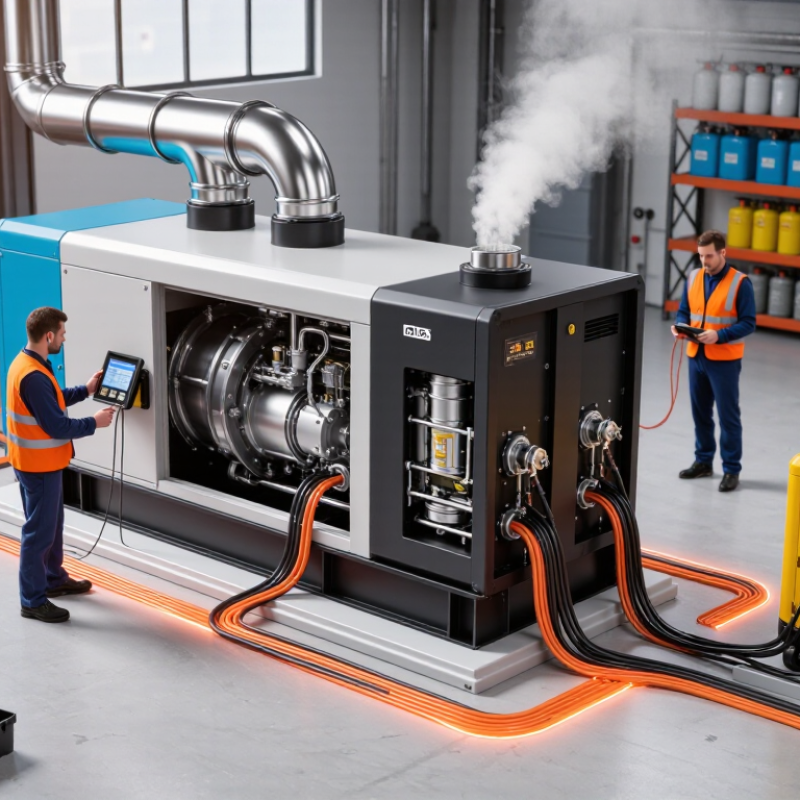
It becomes a practical rehearsal. Hot air leaves the radiator. The load bank’s cables warm under current. Instruments record changes that a brief no-load start will never reveal. Generator commissioning specialist Jim McDonald states, “A generator is proven under load, not at idle.” That principle explains the value of scheduled testing under manufacturer guidance, NFPA 110 expectations, and applicable ISO 8528 practices.

A proper test can uncover wet stacking, weak batteries, clogged fuel filters, cooling restrictions, or unstable control settings. It also confirms whether the generator can accept load gradually and recover after sudden demand changes. Small defects matter. A loose connection may remain invisible until the system carries hundreds of amperes.

Dummy load testing is not a perfect substitute for every live-load scenario. It cannot reproduce every motor start or building interaction. That limitation deserves honesty. Still, it gives operators measurable evidence before an outage creates pressure, darkness, and expensive disruption. For hospitals, data centers, factories, and commercial buildings, that evidence can separate dependable standby power from a machine that merely starts.
Top 10 Reasons Why a Generator Needs a Dummy Load Test?

What Is a Generator Dummy Load Test?

A generator dummy load test uses a temporary electrical load to simulate real operating demand. Instead of powering office equipment or machinery, the generator supplies a controlled load bank. The load converts electrical energy into heat, which is safely discharged through fans. This allows technicians to examine performance without risking connected equipment.

During the test, technicians increase the load in measured steps. They record voltage, frequency, current, oil pressure, coolant temperature, and exhaust behavior. These readings show whether the generator responds correctly at low, medium, and high demand. A proper test also checks circuit breakers, alarms, automatic controls, and cooling capacity. It can expose wet stacking, unstable frequency, weak batteries, or poor fuel delivery.

Small details matter. A loose connection may heat during a 75 percent load step. A blocked air path can raise temperatures within minutes. Testing under load also proves that stored fuel and backup systems can support actual operation, not just engine starting. The process needs qualified personnel, calibrated instruments, ventilation, and a written record. A short no-load run is not enough. It may sound reassuring, but it reveals little. Even experienced teams can miss an abnormal vibration or record a reading too late. That is why repeat testing, careful observation, and honest maintenance notes remain essential.

How Dummy Load Testing Verifies Generator Performance

A dummy load test verifies whether a generator can deliver its rated power under controlled conditions. Technicians connect a load bank and increase demand in measured steps. They monitor voltage, frequency, amperage, exhaust temperature, and oil pressure. This process reveals weak batteries, blocked cooling paths, unstable regulators, or fuel problems. No guesswork.

NFPA 110 recommends regular operational testing for emergency power systems, while ISO 8528-6 defines performance test methods for generating sets. These standards make testing more than a quick start-up check. A generator may start successfully yet fail when elevators, pumps, or server loads connect together. Load banks recreate that pressure without risking critical equipment. Operators can also confirm whether the unit reaches its rated capacity and maintains stable output.

The financial risk is significant. Uptime Institute’s Annual Outage Analysis 2024 reported that 54% of respondents experienced an outage costing more than 100,000 dollars. A documented load test can expose problems before an outage exposes them publicly. Technicians should record readings at each load step, including recovery after sudden load removal. That detail matters. A test that lasts only a few minutes may miss overheating or fuel starvation. In practice, maintenance teams sometimes trust old test sheets too much. That is a mistake worth reviewing. Fresh measurements, calibrated instruments, and visible corrective actions create more reliable evidence of generator performance.

Top 10 Reasons Why a Generator Needs a Dummy Load Test

Dummy load testing verifies whether a generator maintains stable voltage and frequency as electrical demand increases. The chart shows representative, non-brand-specific measurements from no-load through full-load conditions.

Interpretation: A well-performing generator should keep voltage and frequency deviations within acceptable limits at every load level. Increasing deviation may indicate fuel-system, governor, voltage-regulator, cooling, or maintenance issues.

Why Testing Protects the Engine, Alternator, and Fuel System

A generator can appear healthy during a brief no-load start, yet hide serious weakness. A dummy load test applies controlled electrical demand, similar to the work the set must perform during an outage. Technicians can monitor voltage, frequency, exhaust temperature, oil pressure, and vibration under stable conditions. This evidence is more useful than a quick idle check. It also shows whether the engine reaches operating temperature and holds speed without hunting. Small warning signs matter.

The engine benefits because loaded operation burns fuel more completely and exposes cooling problems, governor faults, and declining compression. The alternator receives a real test too. Excess heat, unstable voltage, insulation weakness, or abnormal harmonics may appear only when current flows. A measured load also confirms that protective shutdowns respond correctly. Keep records of load percentage, test duration, readings, and ambient conditions. Trends often speak louder than one impressive result.

Fuel systems need attention as well. A test can uncover clogged filters, weak pumps, contaminated fuel, or restricted injectors when demand rises. Exhaust smoke should not be ignored; changes can signal poor combustion or over-fueling. Test frequency should reflect duty, environment, and maintenance history. Test records matter. A rushed test can mislead, while an excessive load can damage equipment. Qualified personnel should follow service limits, use calibrated instruments, and investigate unusual readings before returning the unit to standby.

When and How to Conduct a Safe Dummy Load Test

Top 10 Reasons Why a Generator Needs a Dummy Load Test?

When and How to Conduct a Safe Dummy Load Test

A dummy load test proves whether a generator can carry its rated demand without risking live equipment. Uptime Institute’s 2024 Annual Outage Analysis reported that 54% of surveyed organizations experienced an outage during the previous three years. Power failures remain a major contributor. A routine start-up test cannot reveal weak breakers, unstable frequency, poor cooling, or fuel-system limitations. It only proves that the engine starts.

Test timing matters. Conduct a dummy load test during commissioning, after major repairs, and at intervals based on site risk, equipment guidance, and maintenance standards. NFPA 110 generally requires emergency generators to operate monthly, with a loaded exercise commonly reaching at least 30% of nameplate capacity. A load bank can provide that demand when the facility cannot safely accept it. Begin with a visual inspection. Check cables, ventilation, exhaust clearance, fuel levels, battery condition, and emergency-stop access.

Load the generator in controlled steps, such as 25%, 50%, 75%, and 100%, while recording voltage, frequency, oil pressure, coolant temperature, and exhaust behavior. Keep qualified personnel nearby. Isolate sensitive systems and prevent backfeeding. Stop immediately if readings become unstable. Do not treat a clean report as perfection. A load bank may expose electrical weakness, but it cannot reproduce every real-world motor surge or weather condition. That limitation deserves honest review.

How Test Results Support Maintenance and Regulatory Compliance

Top 10 Reasons Why a Generator Needs a Dummy Load Test?

A generator can start successfully and still fail under real demand. A dummy load test applies a controlled electrical burden without risking critical equipment. Technicians can record voltage, frequency, exhaust temperature, fuel use, and transfer performance. These measurements create evidence, not assumptions.

The Ponemon Institute’s 2023 Cost of a Data Center Outage report placed the average outage cost at approximately $740,357. That figure makes preventive testing difficult to ignore. A load test may reveal weak batteries, clogged air filters, unstable governors, or cooling problems before an emergency occurs. Test records also support maintenance planning. However, one clean result does not prove permanent reliability. Conditions change.

Compliance depends on documented, repeatable procedures. NFPA 110 includes loaded exercising provisions for emergency power systems, where applicable. ISO 8528 also provides performance and test guidance for reciprocating engine generator sets. A professional report should include test duration, load percentages, environmental conditions, instrument calibration, measured results, defects, and corrective actions. Auditors can then trace what was tested and when.

Uptime Institute research continues to identify power-related events among major data-center outage causes. The exact percentage varies by survey year and facility type. That uncertainty deserves attention. A rushed test, an incorrect load bank setting, or missing records can create false confidence. Qualified personnel should review the results against the generator’s design limits and applicable local requirements.

Top 10 Reasons Why a Generator Needs a Dummy Load Test? - How Test Results Support Maintenance and Regulatory Compliance

No. Reason for the Test What the Test Verifies Typical Data Point or Threshold Maintenance Value Compliance Evidence
1 Confirm the generator can carry its rated load The alternator, engine, cooling system, and control system operate together under a controlled electrical load. Test progressively at approximately 25%, 50%, 75%, and 100% of rated kW, where the test plan permits. Reveals inability to reach rated output, unstable voltage, excessive temperature, or abnormal frequency variation. A signed load profile and instrument readings provide objective evidence for commissioning and periodic inspection records.
2 Prevent wet stacking in diesel engines The engine reaches sufficient operating temperature and combustion load to reduce incomplete-combustion deposits. A planned high-load exercise is commonly performed at about 75% or more of rated load when permitted by the equipment manufacturer and site procedure. Helps identify black smoke, exhaust residue, poor combustion, oil dilution, and declining engine performance. The test duration, applied load, exhaust observations, and corrective actions can be retained in the maintenance log.
3 Validate voltage and frequency stability The voltage regulator, governor, and control system respond correctly as load is applied or removed. Record voltage, frequency, voltage unbalance, and recovery after step changes; compare results with the generator’s approved specifications. Early detection of regulator drift, governor hunting, loose connections, phase imbalance, or control faults. Time-stamped measurements support acceptance testing and demonstrate that operating parameters were checked under load.
4 Verify automatic transfer and emergency response The generator starts, reaches rated conditions, accepts load, and operates continuously after a simulated utility failure. Record start time, transfer time, voltage, frequency, load acceptance, and return-to-normal sequence according to the approved emergency-power procedure. Identifies weak batteries, fuel-delivery problems, starter faults, transfer-switch issues, and control-system alarms. The event log and test report document functional performance of the emergency power system without placing critical building loads at unnecessary risk.
5 Check cooling performance during sustained operation The radiator, fan, coolant circuit, ventilation system, and exhaust arrangement remove heat at operating load. Trend coolant temperature, room temperature, and alarm status throughout the test; readings must remain within approved operating limits. Exposes restricted airflow, dirty radiators, low coolant, fan faults, blocked exhaust paths, or inadequate room ventilation. Thermal trends and alarm verification create a defensible record for safety reviews and corrective-maintenance planning.
6 Test fuel-system reliability The day tank, fuel lines, filters, pumps, valves, and engine fuel system support operation at the planned load. Record fuel pressure or relevant engine data, fuel level, leakage observations, and any low-fuel or filter alarms. Finds restricted filters, contaminated fuel, air ingress, pump problems, leaks, and insufficient fuel autonomy. Inspection checklists, fuel records, and alarm results support preventive-maintenance and emergency-preparedness documentation.
7 Assess engine and alternator condition The unit performs without abnormal vibration, noise, smoke, oil pressure, or winding-temperature indications. Compare oil pressure, coolant temperature, exhaust appearance, vibration observations, and winding temperature with baseline values. Trend comparison helps distinguish normal aging from developing mechanical, electrical, or lubrication problems. Baseline-versus-current reports provide traceable evidence of condition monitoring and risk-based maintenance decisions.
8 Confirm protective devices and alarms operate correctly Shutdowns, warnings, overload protection, emergency stops, and monitoring points respond as designed. Verify each required alarm or trip by approved simulation or test method; do not defeat protection during an energized test. Prevents undetected failures of overspeed, low oil pressure, high coolant temperature, overcurrent, and emergency-stop functions. A protection-function checklist with pass/fail results supports safety audits and inspection authority requirements.
9 Measure fuel consumption and available runtime The relationship between electrical output, fuel use, tank capacity, and expected operating duration is understood. Record kW load, fuel level before and after testing, test duration, and calculated fuel consumption; use calibrated measurement methods where practical. Supports fuel planning, identifies abnormal consumption, and confirms whether the stored fuel volume meets the site risk assessment. Load-and-fuel records provide auditable support for emergency-planning calculations and operating procedures.
10 Create objective records for compliance and lifecycle decisions The generator’s performance is documented using repeatable conditions, calibrated instruments, and defined acceptance criteria. Include date, operating hours, load in kW and percentage, voltage, frequency, temperatures, alarms, test duration, instrument details, and corrective actions. Allows engineers to compare trends, prioritize repairs, verify returned-to-service status, and plan component replacement. Well-structured records support maintenance programs and applicable requirements such as NFPA 110, local electrical codes, and authority-approved procedures.
Note: Test load levels, durations, acceptance limits, and test intervals must be established from the generator’s approved technical data, site risk assessment, applicable local regulations, and the requirements of the responsible authority. Test instruments should be suitable for the measured values and maintained according to the site calibration program.

FAQS

What is a generator dummy load test?

It uses a temporary load bank to imitate real electrical demand. The generator produces power without connecting office equipment or machinery. The load becomes heat, and fans discharge it safely. It is more revealing than a short idle run.

Why is a no-load start insufficient?

A generator may start smoothly but fail under heavy demand. A no-load check cannot reveal weak cooling, unstable frequency, or poor fuel delivery. Sound alone proves little. This is easy to forget.

What measurements are recorded during testing?

Technicians record voltage, frequency, current, oil pressure, and coolant temperature. They also observe exhaust behavior, vibration, and recovery after load removal. Each reading should match a specific load step. Late notes can weaken the evidence.

How is the load increased?

Technicians raise demand in measured stages, such as low, medium, and high percentages. They watch the generator after every change. A loose connection may become hot at 75 percent load. Small details matter.

What problems can a load test reveal?

It can expose weak batteries, blocked air paths, unstable regulators, and restricted fuel flow. It may also reveal wet stacking, abnormal smoke, or poor compression. A blocked cooling path can raise temperature within minutes. No guesswork.

How does testing protect the engine and alternator?

Loaded operation helps confirm proper combustion and stable engine speed. It also checks alternator voltage, heat, insulation condition, and abnormal harmonics. Protective shutdowns should respond correctly. One impressive result is not enough.

What should technicians inspect in the fuel system?

They should check filters, pumps, injectors, stored fuel, and fuel quality. Rising demand can expose restrictions that starting cannot show. Changing exhaust smoke deserves investigation. Ignoring it may become an expensive mistake.

What equipment and procedures support a reliable test?

Qualified personnel should use calibrated instruments, adequate ventilation, and safe load-bank connections. Records should include load percentage, duration, readings, and ambient conditions. Service limits must be followed. An excessive load can damage equipment.

How often should dummy load testing be performed?

The schedule should reflect duty, environment, equipment condition, and maintenance history. Regular testing helps identify trends before an outage occurs. Old test sheets should not replace fresh measurements. That deserves review.

Conclusion

A generator dummy load test uses a controlled electrical load to simulate the conditions a generator would face during real operation. Instead of relying only on low-demand or standby running, the test confirms whether the generator can produce its rated power steadily, maintain proper voltage and frequency, and respond safely to changing loads. This explains why does a generator need a dummy load test: it reveals hidden weaknesses before an emergency occurs.

Regular testing also helps protect the engine, alternator, cooling system, and fuel system by ensuring the generator operates at an appropriate load and reaches suitable operating temperatures. A safe test should be planned by qualified personnel, performed in a ventilated area, and monitored with suitable instruments and protective procedures. Test results can identify maintenance needs, support performance records, and demonstrate that the generator is being inspected and operated according to applicable safety and regulatory requirements.

Mason

Mason

Mason is a seasoned marketing professional with a deep expertise in the company's offerings and a passion for driving brand awareness. With a strong background in digital marketing strategies, he has an innate ability to connect with diverse audiences and effectively communicate product benefits.......